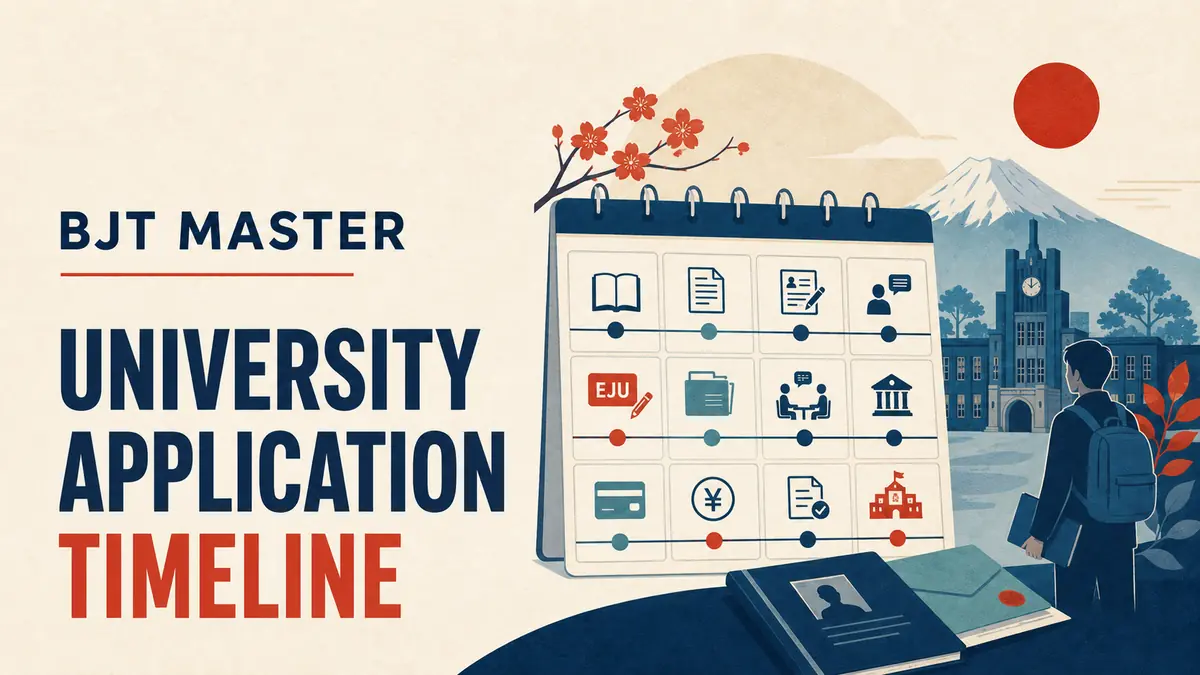
Japanको university application मा धेरै students score भन्दा deadline management का कारण असफल हुन्छन्। EJU subject गलत छान्नु, transcript translation ढिलो गर्नु, recommendation letter अन्तिम समयमा माग्नु, वा admission fee deadline छुटाउनु—यी गल्ती राम्रो academic profile भए पनि महँगा पर्न सक्छन्।
यो guide Nepali students का लागि 12–18 महिनाको reverse timeline हो। तपाईं Nepalबाट apply गर्दै हुनुहुन्छ वा Japanको language schoolबाट, प्रत्येक university र faculty को latest 募集要項 (application guidelines) नै अन्तिम नियम हो। एउटै university भित्र पनि faculty, intake र international-student route अनुसार dates र documents फरक हुन सक्छन्।
पहिलो नियम: intake date बाट reverse planning गर्नुहोस्
Japanको official Study in Japan flowchart ले school selection करिब 12 महिना अघि, application करिब 6–9 महिना अघि, त्यसपछि screening/interview, enrollment payment, COE र visa preparation गर्ने सामान्य क्रम देखाउँछ। यो planning model हो—तपाईंको target university को actual schedule फरक हुन सक्छ। Official source: Study in Japan application flowchart।
12–18 Month University Application Timeline
| समय | मुख्य काम | Deliverable |
|---|---|---|
| 18–15 महिना अघि | Career/major तय, budget र language gap analysis | 3 majors र realistic annual budget |
| 15–12 महिना अघि | University shortlist, EJU/JLPT/English requirements mapping | 6–10 schools को comparison sheet |
| 12–9 महिना अघि | Required exams register/prepare, transcript र certificates collect | Exam bookings र document inventory |
| 9–6 महिना अघि | Application essays, recommendation, translations, financial plan | Complete master document pack |
| 6–3 महिना अघि | Applications submit, exam fee pay, interview/entrance exam | Receipts, candidate number, interview file |
| 3–1 महिना अघि | Admission decision, enrollment payment, COE/visa steps | Admission letter, payment proof, visa file |
| अन्तिम महिना | Housing, insurance, travel, original documents | Arrival checklist र emergency copies |
Step 1: University shortlist “नाम” ले होइन, requirements ले बनाउनुहोस्
पहिले target faculty र admission route निश्चित गर्नुहोस्। University homepage को general information मात्र नहेर्नुहोस्; international undergraduate admissions को current PDF guideline डाउनलोड गर्नुहोस्। प्रत्येक option का लागि यी fields एउटै spreadsheet मा राख्नुहोस्:
- University, faculty, department र intake month
- Application opening, closing र “must arrive” deadline
- EJU subjects, language र accepted score session/year
- JLPT वा English test requirement र minimum score
- Document screening, online/in-person interview र written exam
- Pre-arrival admission उपलब्ध छ कि Japan आउनुपर्छ
- Application fee, payment method र refund rule
- Result date, enrollment deadline र first payment amount
- COE support र financial-document requirements
Deadline wording ध्यान दिनुहोस्: “postmarked by” र “must arrive by” एउटै होइन। Nepalबाट courier गर्दा holidays, customs वा address error का लागि buffer राख्नुहोस्। Online upload गरेपछि original hard copies पनि चाहिन्छ कि छैन जाँच्नुहोस्।
Step 2: EJU subject mapping पहिले गर्नुहोस्
EJU international undergraduate applicants को Japanese language र basic academic ability evaluate गर्न प्रयोग हुन्छ। JASSO अनुसार EJU सामान्यतया वर्षमा दुई पटक—June र November—हुन्छ। Subjects मा Japanese as a Foreign Language, Science, Japan and the World, र Mathematics छन्; applicant ले target university ले तोकेको subjects र examination language रोज्नुपर्छ। Official source: JASSO: What is EJU?
“EJU दिन्छु” मात्र planning होइन। सही planning यस्तो हुन्छ:
- प्रत्येक faculty ले मागेको subject लेख्नुहोस्।
- Science भए Physics, Chemistry, Biology मध्ये कुन दुई चाहिन्छ जाँच्नुहोस्।
- Mathematics Course 1 वा Course 2 स्पष्ट गर्नुहोस्।
- Question language Japanese वा English कुन स्वीकारिन्छ जाँच्नुहोस्।
- कुन EJU session का scores valid छन् भनेर guideline हेर्नुहोस्।
- Application deadline भन्दा result समयमै आउँछ कि आउँदैन calendar मा राख्नुहोस्।
केही institutions ले EJU-based pre-arrival admission दिन सक्छन्, तर सबैले दिँदैनन्। JASSO को school list उपयोगी starting point हो; final confirmation university guideline बाट गर्नुहोस्।
Step 3: Document master file बनाउनुहोस्
Exact list फरक भए पनि धेरै applications मा तलका categories देखिन्छन्। कुनै document आफैं अनुमान गरेर translate वा alter नगर्नुहोस्। Issuer, translation language, certification र validity requirement university सँग verify गर्नुहोस्।
- Application form र recent photo
- Passport/residence card copy
- High school graduation certificate वा expected-graduation certificate
- Academic transcripts र grading-scale explanation
- EJU, JLPT, TOEFL, IELTS वा अन्य required score proof
- Statement of purpose/study plan
- Recommendation letter
- Financial sponsor, bank balance र income-related evidence
- Application fee payment proof
- Japanमा भए attendance/grades from language school
Document control table
| Document | Issuer | Original? | Translation? | Issue date/validity | Ready |
|---|---|---|---|---|---|
| Transcript | School | Check | Check | Check guideline | ☐ |
| Graduation proof | School/board | Check | Check | Check guideline | ☐ |
| Language score | Testing body | Check reporting method | Usually no | Score validity | ☐ |
| Financial proof | Bank/sponsor | Check | Check | Recent issue may be required | ☐ |
सबै files को consistent English spelling प्रयोग गर्नुहोस्। Passport मा भएको name order, school certificates र online application फरक भए explanation वा supporting document चाहिन सक्छ। Scan readable, full-page, color र prescribed file size/format मा राख्नुहोस्।
Step 4: Statement of Purpose लाई generic नबनाउनुहोस्
“Japan developed country हो” वा “म culture मन पराउँछु” मात्रले academic fit देखाउँदैन। राम्रो structure:
- Problem/interest: कुन academic वा social problem ले तपाईंलाई यो field तिर ल्यायो?
- Preparation: school subjects, projects, work वा volunteering बाट के सिक्नुभयो?
- Why this faculty: specific curriculum, seminar, lab वा teaching approach किन fit हुन्छ?
- Study plan: पहिलो वर्षदेखि graduation project सम्म के develop गर्न चाहनुहुन्छ?
- Career link: degree पछि कुन role वा contribution लक्ष्य हो?
एउटै essay सबै universities मा copy-paste नगर्नुहोस्। Facts जाँच्नुहोस् र professor/lab को नाम लेख्दा त्यो undergraduate applicants का लागि वास्तवमै उपलब्ध छ कि छैन verify गर्नुहोस्। AI-generated वा अरूको essay submit गर्नु अघि university को academic-integrity rules बुझ्नुहोस्; अन्तिम content तपाईंको वास्तविक experience र आफ्नै voice मा हुनुपर्छ।
Step 5: Interview preparation — उत्तर होइन, evidence तयार गर्नुहोस्
- Why Japan, why this university, why this faculty?
- तपाईंको academic weakness र सुधार plan के हो?
- Tuition/living expenses कसरी fund हुन्छ?
- Japanese lecture नबुझे के strategy अपनाउनुहुन्छ?
- Graduation पछि career plan के हो?
- Recent topic वा target field को problem बारे तपाईंको विचार के हो?
प्रत्येक answer मा claim + evidence + link to future study प्रयोग गर्नुहोस्। उदाहरण: “I am hardworking” भन्दा “I raised my mathematics score by following a 12-week error-log plan; यही method EJU preparation मा प्रयोग गरें” बढी credible हुन्छ। Online interview भए camera, microphone, ID, room, time zone र backup internet एक दिनअघि test गर्नुहोस्।
Step 6: Result पछि payment deadline नछुटाउनुहोस्
Admission offer आएपछि excitement मा तुरुन्त पैसा नपठाउनुहोस्; offer conditions पढ्नुहोस्। Enrollment/entrance fee र tuition का अलग deadlines हुन सक्छन्। अर्को university को result पर्खँदा seat-retention payment गुम्न सक्छ। Payment अघि जाँच्नुहोस्:
- Amount, currency, bank charges र beneficiary details
- Deadline Japan time मा हो कि payment-arrival date हो
- Refundable र non-refundable portions
- Visa refusal वा withdrawal हुँदा refund rules
- Payment proof कहाँ upload/email गर्ने
- COE process सुरु गर्न थप financial documents चाहिन्छ कि छैन
Deadline Control System: 3-Date Method
प्रत्येक official deadline का लागि तीनवटा date बनाउनुहोस्:
- Official date: university को अन्तिम deadline।
- Personal submission date: official date भन्दा 7–14 दिन अघि।
- Document-ready date: personal submission भन्दा कम्तीमा 14 दिन अघि।
उदाहरण: official deadline November 30 भए personal target November 16 र complete document target November 2 राख्न सकिन्छ। Courier वा external score reporting चाहिने अवस्थामा अझ ठूलो buffer राख्नुहोस्। Calendar reminder 30, 14, 7, 3 र 1 दिनअघि set गर्नुहोस्।
Common mistakes र समाधान
| गल्ती | जोखिम | समाधान |
|---|---|---|
| Wrong EJU subject/course | Application ineligible | Faculty guideline बाट subject-language matrix बनाउनुहोस् |
| Unofficial translation | Document rejection/delay | Required translator/certification पहिले verify गर्नुहोस् |
| Name mismatch | Identity clarification | Passport spelling master बनाउनुहोस् |
| Generic SOP | Weak academic fit | Curriculum-specific evidence लेख्नुहोस् |
| Last-day courier | Arrival deadline miss | Personal deadline 1–2 weeks early |
| Payment receipt नपठाउनु | Enrollment incomplete | Receipt submission step checklist मा राख्नुहोस् |
| Agentमा पूर्ण निर्भरता | Wrong/outdated information | Official guideline आफैं पढेर universityलाई सोध्नुहोस् |
Final Application Checklist
- ☐ Current-year faculty-specific 募集要項 पढेको छु।
- ☐ Required EJU subjects, course र language सही छन्।
- ☐ All official deadlines Japan time सहित calendar मा छन्।
- ☐ Names र dates सबै documents मा consistent छन्।
- ☐ Translation/certification rules verify गरेको छु।
- ☐ SOP वास्तविक experience र specific curriculum सँग जोडिएको छ।
- ☐ Recommendation writer लाई पर्याप्त समय दिएको छु।
- ☐ Interview technology र answers practice गरेको छु।
- ☐ Application/enrollment payments र refund rules बुझेको छु।
- ☐ Submission confirmation, receipt र files को backup राखेको छु।
FAQ
सबै Japanese universities ले EJU माग्छन्?
माग्दैनन्। Use, subjects, accepted sessions र minimum expectations institution/faculty अनुसार फरक हुन्छन्। JASSO list बाट खोज सुरु गर्नुहोस् र current university guideline बाट confirm गर्नुहोस्।
JLPT भए EJU Japanese दिनु पर्दैन?
स्वतः होइन। University ले कुन test स्वीकार्छ भन्ने admission guideline ले तय गर्छ। केहीले EJU Japanese, केहीले JLPT, र केहीले दुवै वा अन्य evidence माग्न सक्छन्।
Application agent प्रयोग गर्न मिल्छ?
मिल्छ, तर official flowchart ले brokers का excessive fees वा misinformation बारे सावधानी अपनाउन भनेको छ। कुनै पनि document नक्कली बनाउने सुझाव अस्वीकार गर्नुहोस् र प्रत्येक claim universityसँग verify गर्नुहोस्।
एकै वर्ष धेरै universities मा apply गर्न मिल्छ?
सामान्यतया multiple applications सम्भव हुन्छन्, तर exam dates, fees, enrollment deposits र each institution का rules manage गर्नुपर्छ। Acceptance पछि अर्को result पर्खँदा non-refundable payment लाग्न सक्छ।
निष्कर्ष
Successful application को backbone एउटा simple system हो: faculty-specific requirements → exam calendar → document tracker → early personal deadline → interview evidence → payment control। Official deadline लाई target होइन, emergency limit मान्नुहोस्। 12–18 महिना अघि reverse planning सुरु गर्दा exam retake, translation र financial preparation का लागि वास्तविक समय मिल्छ।
Disclaimer: यो general educational planning guide हो। Admissions, EJU schedules, fees, document rules र immigration procedures परिवर्तन हुन सक्छन्। Submit वा payment गर्नु अघि target university, JASSO र सम्बन्धित official authority को latest information जाँच्नुहोस्।
यो विषयमा थप पढ्नुहोस्: Study in Japan guides मा सम्बन्धित checklist, exam update र practical resources भेटिन्छन्।